

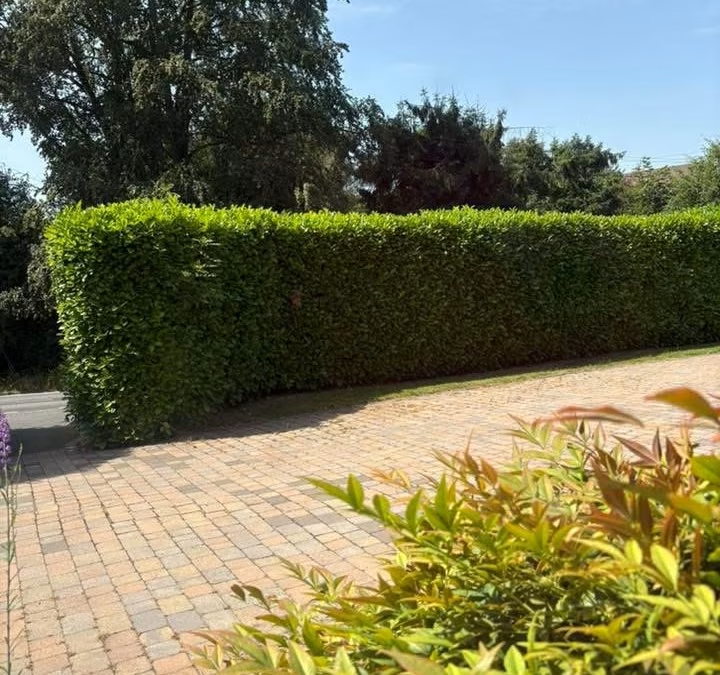
Whether you’re creating privacy, marking a boundary, encouraging wildlife or simply adding structure to your garden, choosing the right hedge is one of the most important decisions you’ll make. At Farlow Farm Nursery, we’ve been growing hedging plants for over 50 years, and because everything is grown here on our Shropshire nursery, we know what performs well in British gardens.
Here’s what to consider before planting. The first step is deciding the purpose of your hedge.
Are you looking to:
- Create privacy from neighbours?
- Shelter your garden from wind?
- Define a driveway or boundary?
- Encourage birds, bees and wildlife?
- Add year-round colour and structure?
- Create a formal, neatly clipped hedge?
Once you know the purpose, choosing the right species becomes much easier.
Evergreen hedging
EIf year-round privacy is important, an evergreen hedge is often the obvious place to start. Evergreen hedging keeps its foliage throughout the year, providing screening and structure even through the winter months. Popular choices include Laurel, Yew, Holly, Griselinia and smaller-leaved options such as Ilex crenata. Evergreen hedging can work particularly well around gardens, driveways and seating areas where screening is wanted throughout the year.
Deciduous hedging
Deciduous hedging changes with the seasons and generally loses its leaves during autumn and winter. However, species such as Beech and Hornbeam can often retain some of their brown leaves through winter, particularly when regularly clipped as a hedge. Popular choices include Beech, Hornbeam, Hawthorn, Field Maple and Hazel. Native deciduous species are particularly useful for countryside planting and mixed native hedgerows, providing valuable food and habitat for wildlife.
Fast-growing or slow-growing?
If you’re looking to establish privacy relatively quickly, a faster-growing hedge such as Laurel could be a good choice. Slower-growing species such as Yew or compact Box alternatives take longer to establish but generally require less frequent trimming once they’re growing. It’s worth remembering that faster growth usually means more maintenance, so think about how often you’re prepared to get the hedge cutter out!
Formal or natural?
The style of hedge you’re trying to create can also help narrow down your options. Yew, Box, Ilex crenata and Hornbeam can all be maintained as smart, neatly clipped hedges and work particularly well where you want a more formal appearance. For something softer and more natural, consider Hawthorn, Blackthorn, Hazel or a mixed native hedge. A mixture of native species can create an attractive countryside-style boundary while also providing food and shelter for birds, pollinators and other wildlife.
Potted, bareroot or rootball?
Once you’ve chosen your species, you’ll also need to decide which type of hedging is right for your project.
| Type | Available | Best For |
| Potted | All year | Planting at any time |
| Bareroot | Nov–Mar | Cost-effective large planting projects |
| Rootball | Nov–Mar | Larger, instant-impact hedges |
Potted Hedging
Potted hedging is available throughout the year and can be planted whenever conditions are suitable and the ground isn’t frozen or waterlogged. It’s a flexible option for garden hedges, replacement plants and projects that can’t wait until the traditional hedging season. Browse our Potted Hedging.
Bareroot Hedging
Bareroot hedging is available during the dormant season, typically November to March, weather dependent. Because the plants are supplied without a pot or soil around their roots, bareroot hedging can be a particularly cost-effective way of planting longer stretches of hedge. It’s popular for farms, estates, landscaping projects, countryside planting and larger gardens. We also grow BN11 grant-compliant native hedging mixes for suitable environmental and countryside planting schemes. Browse our Bareroot Hedging.
Rootball Hedging
Rootball hedging is field-grown before being carefully lifted during the dormant season with soil retained around the roots. It’s particularly useful when you’re looking for larger, more established hedging plants and want to create greater impact from the start. Like bareroot plants, rootball hedging is seasonal and is generally available from November to March, weather dependent. Browse our Rootball Hedging.
How much maintenance do you want?
Every hedge needs some maintenance, but how much depends on the species and the finish you’re trying to achieve. A fast-growing hedge can provide screening sooner, but you’ll usually need to trim it more frequently to keep it under control. Slower-growing varieties can take longer to reach the size you want but may need less frequent trimming. It’s also worth considering the eventual height and width of your hedge. Choosing a species that naturally suits the space can save you a lot of work trying to keep an unsuitable hedge within bounds later.
Still not sure which hedge is right for you?
With so many species available, choosing the right hedge can seem a little daunting – but that’s where we can help.
We’ve been growing hedging plants at Farlow Farm Nursery for over 50 years and can help you choose a suitable option for your site, whether you’re planting a small garden boundary or several hundred metres of countryside hedging.
You can browse our full range of Hedging Plants online, visit us here at the nursery, or get in touch if you’d like some advice before planting.